
A good digital detox destination has three traits. First, limited or no cell reception. Second, enough physical activity or natural beauty to fill the hours you would have spent scrolling. Third, a culture or rhythm that rewards slowing down.
Researchers who study travel and wellbeing note that the goal is not punishment. It is sensory immersion. Dr. Andrew Stevenson, author of The Psychology of Travel, explains that happiness during travel comes from “experiencing places through the senses directly” through dancing, cooking, or visiting a gallery, “things associated with the offline experience, multisensory rather than best digital detox travel destinations”.
The destinations here fit that standard. They are not simply remote. They are rich.
Kamikochi Valley, Japan
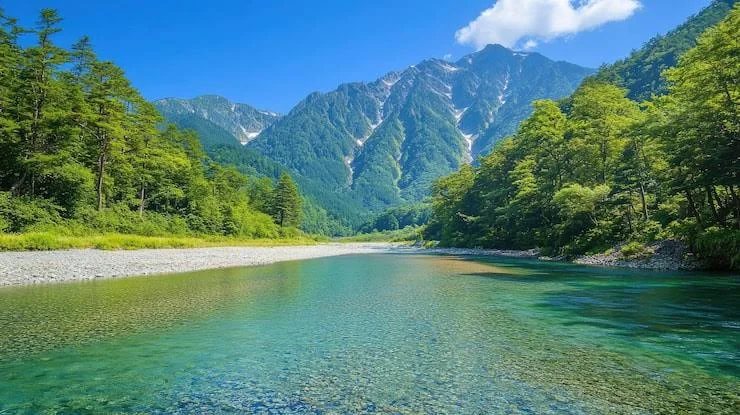
Kamikochi sits in the Northern Japanese Alps, and the valley has no private vehicles allowed. You arrive by bus or taxi, then walk. The Azusa River runs through the middle, clear enough to see every stone on the bottom. The Kappabashi Bridge frames the Hotaka mountain range in a way that makes you put the camera down after the first photo, because the photo cannot hold it.
The trails range from flat riverside walks to serious alpine routes. Most visitors cluster near the main paths. Walk twenty minutes in either direction and the crowd thins to almost nothing. What remains is the sound of water and wind through the trees.
Read Also: Solo Travel Tips For First Time Travelers
Banff National Park, Canada
Banff is not a secret. Five million people visit each year. But the park is enormous, and the majority of those visitors never leave the parking lots at Lake Louise or the town of Banff itself.
The trick is to head for the lesser-travelled trails. The park covers 6,641 square kilometers of Rocky Mountain terrain, with turquoise lakes, glaciers, and forests that swallow sound. Cell coverage is spotty even in developed areas and disappears entirely on backcountry routes. You can hike for hours without seeing another person or a single bar of signal.
Daintree Rainforest, Australia
Sir David Attenborough called Daintree “the most extraordinary place on earth”. The rainforest is 180 million years old, the oldest on the planet. It meets the ocean in northeastern Queensland, where the reef and the forest touch.
The Kuku Yalanji people are the traditional owners here, and some experiences include guided walks where they share knowledge that has been passed down for generations. That kind of learning does not happen through a screen. It happens standing in the mud, listening to someone who knows the land in a way no app can replicate.
Death Valley National Park, USA
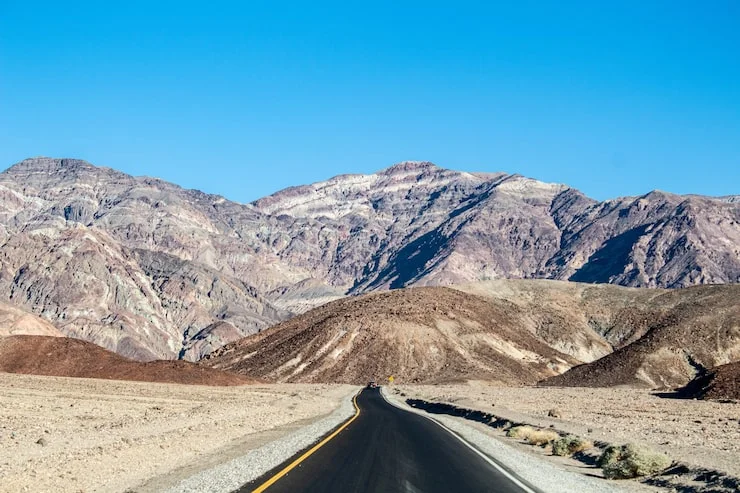
Death Valley is the driest and lowest place in North America. It is also an International Dark Sky Park, which means the night sky is protected from light pollution. In spring, the Milky Way is visible with the naked eye, spread across the sky in a way that most people have never seen.
Cell service is unreliable across most of the park. The heat forces you to move slowly and drink water. The scale of the dunes and salt flats recalibrates your sense of what matters. You cannot scroll through a place like this. You can only walk through it.
Read Also: How To Plan Kedarnath Trip On Budget
Erawan National Park, Thailand
Erawan is named for the three-headed elephant from Hindu mythology, and the seven-tiered waterfall at its center is the main draw. Each tier has an emerald pool where you can swim. The water is cool and clear. After the seventh tier, the trail continues into caves with stalactites and ancient rock paintings.
The park is northwest of Bangkok, far enough to escape the city’s constant connectivity but close enough for a long weekend. Elephants still live in the park, along with deer and gibbons. You hear them more than you see them.
The Practical Side of Disconnecting
Going to a remote place is half the work. The other half is preparing so you do not panic when the signal drops.
Catherine Price, author of How to Break Up With Your Phone, suggests a “trial separation” before the trip. Leave your phone in a drawer for a few hours at home. She says the withdrawal is milder than people expect. “It tends to be much easier than people fear,” she told The New York Times. “It’s not like you’re training for a marathon”.
Packing helps too. A wristwatch replaces the clock function. A small camera replaces the phone camera and gives you something tactile to hold. A paper journal replaces the notes app. Price recommends an alarm clock specifically because it keeps the phone out of the bedroom, which she considers a basic rule of good sleep.
Some hotels make this easier. Miraval Resorts gives guests “cell phone sleeping bags” to put their devices out of sight. Six Senses properties let guests hand in their phones at reception.
Why This Trend Is Growing?
The numbers behind digital detox travel are not subtle. G Adventures commissioned research that found 66% of travelers say relaxation and de-stressing are the main reasons they book a vacation. Among travelers aged 25 to 30, more than a quarter said being able to switch off from devices was what made them happiest on a previous trip.
That last finding matters. The people who grew up with smartphones are the ones most eager to escape them, at least for a week. The destinations above are not anti-technology. They are places where technology simply has no role to play. The landscape takes over. And that, it turns out, is the best digital detox travel destinations.