
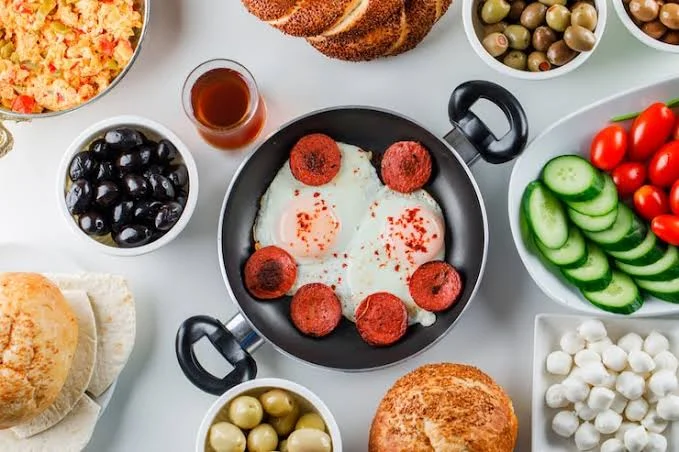
If you want to understand Greek food beyond the tourist tavernas, start with breakfast. The morning table in Greece is not a rushed affair. It is a quiet statement about what the country grows, what it preserves, and what it values. A traditional Greek breakfast is rarely a single dish. It is a collection of small things placed on the table with intention: bread, cheese, olives, yogurt, honey, fruit, and strong coffee. Each item has a reason for being there. Understanding those reasons tells you more about Greece than any restaurant menu ever could.
The short answer for anyone planning a trip or a meal: A traditional Greek breakfast centers on fresh bread, feta or other local cheeses, Kalamata olives, thick strained yogurt with honey, seasonal fruit, and Greek coffee. Regional variations add pies, doughnuts, and savory pastries. The meal is simple, seasonal, and built for slow eating rather than quick fueling.
Why Greek Breakfast Looks the Way It Does?
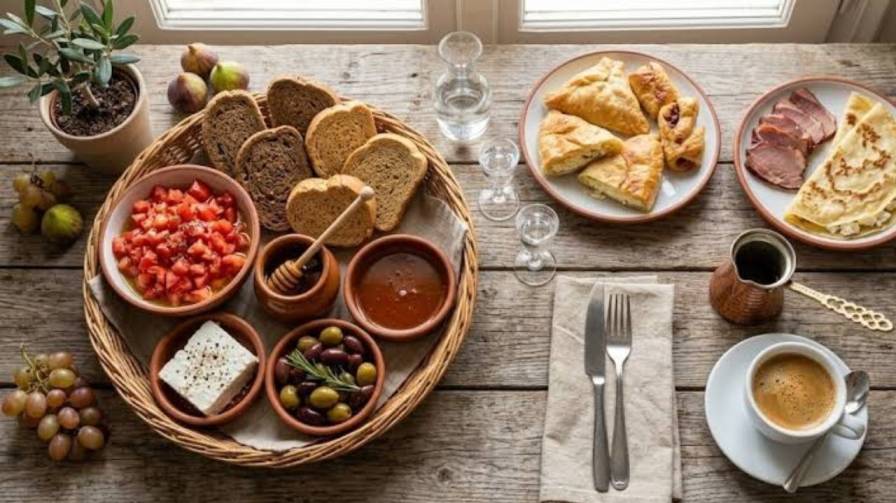
Greece has a Mediterranean climate with long, hot summers and mild, wet winters. That weather shapes what farmers can grow and what families can store. Olives grow almost everywhere. Sheep and goats graze on rocky hillsides, which is why cheese and yogurt appear on nearly every table. Wheat grows in the northern plains. Honey comes from wild herbs and pine forests. None of this is accidental. The breakfast table is a map of the landscape.
There is also a practical side. For generations, Greek families ate breakfast before heading into fields, shops, or schools. The food needed to be filling without being heavy. It needed to keep well in warm weather. Bread, cheese, and olives fit that requirement perfectly. They required no cooking, no refrigeration, and no elaborate preparation. A piece of bread, a slice of cheese, and a handful of olives could be wrapped and eaten hours later without losing quality.
That practicality survives today, even for Greeks who work in offices and cities. The morning meal remains stubbornly simple. You will not find towering stacks of pancakes or complicated egg dishes on a traditional Greek breakfast table. You will find good ingredients treated with respect.
Read Also: Authentic Southern Cuisine Dishes
The Core Foods You Will Find on Almost Every Table
Bread and Cheese
Fresh bread is the foundation. In villages, families still buy from local bakeries early in the morning, often before sunrise. The bread is usually a crusty loaf or a round flatbread, sometimes whole wheat, sometimes white. It is torn by hand, not sliced neatly. The act of tearing bread and dipping it into olive oil or pairing it with cheese is the central gesture of the Greek morning.
Feta is the most famous Greek cheese, but it is not the only one. Graviera, a firm sheep’s cheese with a slightly sweet finish, often appears at breakfast on islands like Naxos and Crete. Kefalotyri, a sharp and salty cheese, shows up grated or sliced. Anthotyros, a soft, mild cheese made from sheep or goat milk, is sometimes served with honey instead of savory accompaniments. The choice depends entirely on what the local shepherd produces.
Olives and Olive Oil
Kalamata olives are the most recognized Greek variety, but breakfast tables across the country use whatever olives grow nearby. Small, wrinkled black olives from Thassos. Green olives cured with lemon and herbs. The olives are never served cold from a jar. They sit at room temperature, often in a small bowl with a drizzle of local oil.
Olive oil itself is not a dressing at breakfast. It is a condiment used with confidence. People dip bread into it. They pour a little over sliced tomatoes. They drizzle it over cheese. The oil is usually the current season’s harvest, peppery and green, not the mild supermarket version sold abroad.
Yogurt and Honey
Greek yogurt has become a global product, but the breakfast version in Greece is different from what you find in plastic tubs overseas. It is thick enough to hold a spoon upright. It is strained until most of the whey is gone, leaving a dense, creamy texture with a clean, tangy flavor. It is served in a bowl with a generous spoonful of raw honey, often thyme honey from Crete or pine honey from Evia. Sometimes walnuts or fresh fruit are added. Never sugar. The honey does the work.
This combination is not a dessert. It is a morning staple, eaten for energy and protein. Shepherds ate it before long days with flocks. Children eat it before school. The simplicity is the point.
Fresh Fruit and Vegetables
Seasonal fruit appears on the table depending on the month. Figs in late summer. Oranges in winter. Apricots and cherries in spring. A sliced tomato with a pinch of salt and a drop of oil is a common morning addition, especially in summer when tomatoes taste like tomatoes should.
Cucumber slices, radishes, and sometimes small green onions round out the vegetable side. These are not garnishes. They are eaten in quantity, providing freshness and water content in a hot climate.
Greek Coffee
Coffee is the final piece. Greek coffee is made in a small copper pot called a briki. The grounds are fine, almost powder-like, and boiled directly with water and sugar if desired. It is served in a small cup, grounds settled at the bottom, and it is sipped slowly. The ritual matters as much as the caffeine. People sit. They talk. They do not rush.
Instant coffee exists in Greece, and many people drink it. But the traditional breakfast coffee is the briki version. It signals that the day has not yet taken over.
Regional Breakfast Foods That Change Everything
Greece is not a single culinary culture. The mainland, the islands, and the northern mountains each have their own morning traditions. What appears on a table in Athens may be completely absent in a village on the island of Chios.
Bougatsa: The Custard Pie of the North
In Thessaloniki and parts of northern Greece, breakfast often means bougatsa. This is a phyllo pie filled with semolina custard, baked until the pastry shatters and the filling is warm and soft. It is served plain, dusted with powdered sugar, or with cinnamon. Some shops make savory versions with cheese or minced meat, but the custard version is the morning standard. You eat it standing at a counter or walking down the street, still warm from the oven.
Koulouri: The Sesame Ring
Walk through any Greek city in the morning and you will see people carrying koulouri. This is a circular bread ring covered in sesame seeds, chewy inside and slightly crisp outside. Vendors sell them from small carts or bakeries, often for less than a euro. It is the Greek equivalent of a croissant or a breakfast sandwich, but simpler. Just bread, sesame, and a little salt. It is eaten on the go, with coffee, or torn apart and shared.
Dakos: Crete’s Morning Salad
On Crete, breakfast can look like a salad. Dakos is a barley rusk, hard and dry, softened with a little water or olive oil, then topped with grated fresh tomato, crumbled mizithra cheese, and oregano. It is savory, crunchy, and refreshing. The rusk holds up well in heat, which is why it became a staple on an island where mornings are already warm.
Tiganites: The Ancient Pancake
Tiganites are small, thick pancakes made from flour, water, and a little olive oil, fried in a pan and served with honey and walnuts. They are not fluffy like American pancakes. They are denser, with a slightly chewy texture. References to similar flatbreads fried in oil go back to ancient Greek texts. This is not a modern invention. It is a recipe that has survived for thousands of years because it works.
Strapatsada: Eggs with Tomatoes
In some homes, especially in summer when tomatoes are abundant, breakfast includes strapatsada. Eggs are scrambled with grated tomato, olive oil, salt, and sometimes feta. It is cooked quickly in a hot pan and eaten with bread. The dish is simple, but the quality of the tomatoes determines everything. In August, when tomatoes are sweet and soft, strapatsada tastes like the season itself.
You May Also Like: Authentic Rajasthani Dal Baati Recipe At Home
How Breakfast Fits Into the Greek Day?
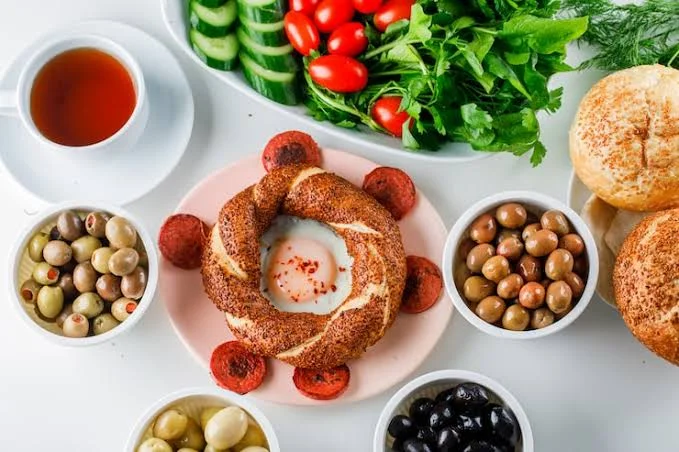
The traditional Greek breakfast is not a large meal by American or British standards. It is moderate. A piece of bread, some cheese, a few olives, a bowl of yogurt, coffee. The larger meal comes later, often lunch in the afternoon, followed by a light evening meal. This pattern of eating aligns with the Mediterranean approach to food: moderate portions, fresh ingredients, and meals spread across the day rather than concentrated in one heavy sitting.
There is also a social dimension. Breakfast in Greece, when it happens at home, is often eaten standing in the kitchen or sitting briefly at a table with family. But the coffee portion can stretch. On weekends, people linger. They sit on balconies. They watch the street. The food is finished, but the coffee remains, and the conversation continues. The meal is not just about nutrition. It is about the pause before the day begins.
What to Avoid If You Want a Real Traditional Breakfast?
Tourist areas in Greece often serve what they think visitors expect: eggs Benedict, pancakes with syrup, omelets with bacon, and “Greek” yogurt parfaits loaded with granola and chocolate. These are not traditional. They are adaptations. They are not bad food, but they are not what Greek families eat.
If you want the real thing, look for the simple items. Buy bread from a bakery. Find a shop that sells cheese by weight. Look for koulouri vendors on the street. Order Greek coffee, not a latte. Sit down. Take your time. The food is simple on purpose, and that simplicity is the whole point.
Final Thought
Traditional Greek breakfast is not a recipe. It is a habit of eating what is local, what is in season, and what tastes good without much fuss. It is bread torn by hand, cheese sliced thick, olives warmed by the morning air, and coffee that takes ten minutes to make and twenty to drink. It is a meal that has fed farmers, fishermen, schoolchildren, and grandmothers for centuries. It does not need to be modernized or improved. It needs to be eaten slowly, with attention, and preferably with someone else at the table.