
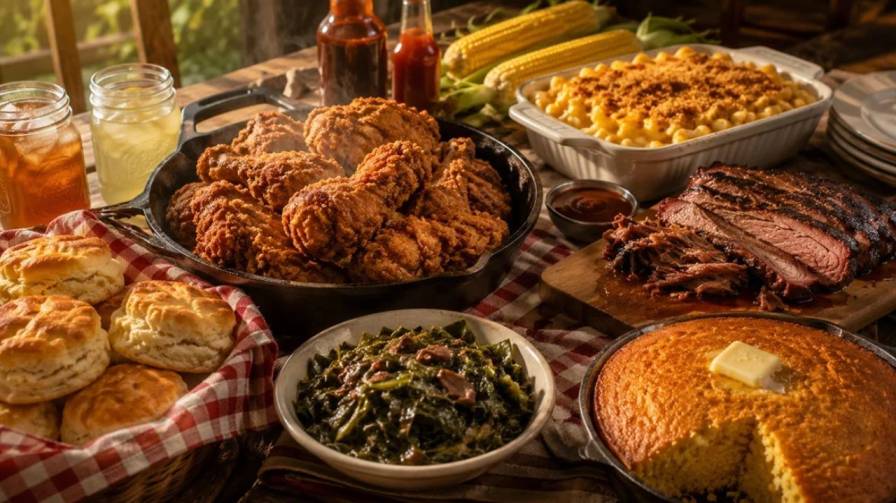
Authentic Southern cuisine dishes are the foods that grew out of the American South’s mix of Native American, African, and European cooking traditions. The most recognized dishes include fried chicken, gumbo, collard greens, biscuits, shrimp and grits, and banana pudding. What makes these dishes authentic is not a single recipe but the ingredients and techniques that families and cooks have passed down for generations, shaped by the region’s history and its people.
This guide looks at what authentic Southern food really means, where its signature dishes come from, and how the food changes from one part of the South to another. It is written for anyone who wants to understand the cuisine beyond a restaurant menu.
What Makes Southern Food Authentic?
Authenticity in Southern cooking is a tricky idea. There is no single “official” version of most dishes. A gumbo in New Orleans may start with a dark roux, while a gumbo in another part of Louisiana might use okra as its thickener . Both are real. Both are Southern.
What ties authentic Southern food together is a set of shared ingredients and methods. Corn, beans, and squash came from Native American farming. Rice, okra, and deep-frying techniques came from West Africa. Pigs, cattle, wheat, and garden vegetables came from European settlers . Over centuries, these elements mixed in Southern kitchens, and the result is a cuisine that is both specific to a place and constantly changing.
The other marker of authenticity is the cooking itself. Southern food is often cooked low and slow. Greens simmer for hours. Gumbo stews until the flavors marry. Biscuits are made by hand, with cold fat and a light touch. These methods are not fancy, but they demand attention. That practical, patient approach is part of what makes the food feel real.
Read Also: Healthy Indian Vegetarian Dinner Ideas
The Role of Enslaved Africans in Shaping Southern Food
It is not possible to talk about authentic Southern cuisine without talking about the people who cooked it. Much of what we now call Southern food was created and refined by enslaved Africans and their descendants. Collard greens, for example, were grown by enslaved people in cabin gardens as a source of nutrition to add to plantation rations . The technique of deep-frying chicken, a dish that would become a Southern signature, combined European frying methods with African seasoning and ingenuity .
Gullah Geechee cooking, from the Sea Islands off the coasts of South Carolina and Georgia, carries strong West African influences. Dishes like okra stew, peanut soup, and rice-based meals trace back to that heritage . When you eat a bowl of Hoppin’ John or a plate of shrimp and grits, you are tasting a tradition that survived because people held onto it under terrible conditions. That history is not a side note. It is the foundation.
The Core Dishes of Authentic Southern Cuisine
Fried Chicken
Fried chicken is the dish most people think of first, and for good reason. The South’s version is known for a crisp, seasoned crust and juicy meat. But “fried chicken” is not one thing. At Willie Mae’s in New Orleans, the crust is thin and light, a family recipe that has not changed since the restaurant opened in 1957 . At Leon’s Oyster Shop in Charleston, the chicken is brined in buttermilk and seasoned with Old Bay . At Snackbar in Oxford, Mississippi, it is brined in sweet tea . Each version is rooted in a specific place and a specific cook’s choices.
Gumbo
Gumbo is Louisiana’s official state dish, and it is a perfect example of Southern food’s layered history. The word likely comes from a West African word for okra. The dish itself blends French, Spanish, African, and Native American influences. It can be made with chicken and sausage, with seafood, or with no meat at all. Some versions use a dark roux as a thickener; others rely on okra. At Dooky Chase in New Orleans, the late Leah Chase served a gumbo rich with ham, sausage, shrimp, crab, and chicken, a recipe that stayed the same for decades . The restaurant was also a meeting place for civil rights leaders, which means a bowl of that gumbo carries more than flavor. It carries memory.
Collard Greens
Collard greens are a side dish, but they are also a history lesson. The greens are bitter on their own. Cooked low and slow with a little smoked meat, they become tender and deeply savory. The tradition of cooking them this way comes from necessity and skill. Enslaved Africans grew collards in small plots and turned a tough, cheap vegetable into something nourishing . Today, collards show up on tables across the South, from home kitchens to fine dining restaurants. The best versions still taste like they were cooked with time and authentic Southern cuisine dishes.
Biscuits
A good Southern biscuit has a crisp top and a tender, flaky inside. The ingredients are simple: flour, fat, and buttermilk. The skill is in the handling. Overworking the dough makes the biscuit tough. The best biscuit makers work quickly and gently. At Bomb Biscuit Co. in Atlanta, Erika Council makes classic buttermilk biscuits alongside versions with jalapeño and cheddar . The biscuit is humble, but it is also a test of a cook’s hands. That is why it belongs on any list of authentic Southern dishes.
Shrimp and Grits
Shrimp and grits comes from the Lowcountry, the coastal region of South Carolina and Georgia where rice and seafood have long been staples . The dish is simple in concept: creamy grits topped with seasoned shrimp. But the details matter. The grits should be stone-ground if possible. The shrimp should be fresh. The sauce might include bacon, butter, lemon, or hot sauce, depending on the cook. It is a dish that tastes like the coast, and it has moved from a regional breakfast to a restaurant staple across the country.
Banana Pudding
Banana pudding is the South’s favorite dessert, and its history is tied to trade. Bananas became widely available in the United States in the late 19th century, and Southern cooks built a dessert around them: layers of vanilla custard, fresh banana slices, wafer cookies, and whipped cream . The version at Haberdish in Charlotte comes in a Mason jar . At Gunshow in Atlanta, Kevin Gillespie serves his grandmother’s recipe with a meringue top and pound cake instead of cookies . It is a dessert that feels like a family reunion, even if you are eating it alone.
How Southern Food Changes by Region?
The South is not one place. It is many places, and the food changes as you move across the map.
The Lowcountry of South Carolina and Georgia is defined by rice and seafood. Shrimp and grits, she-crab soup, and Hoppin’ John (black-eyed peas, rice, and smoked pork) come from this region . The cooking here is coastal and tide-driven.
Louisiana has two distinct styles that often get confused. Cajun cooking comes from the French Acadians who settled in the swamps and bayous. It is hearty, country-style food: dirty rice, blackened fish, red beans and rice . Creole cooking comes from the more urban, aristocratic kitchens of New Orleans, blending French, Spanish, and African techniques. Jambalaya, shrimp Creole, and beignets are Creole dishes . Both are authentic. They are just different.
The Deep South—inland Georgia, Alabama, Mississippi, and Arkansas—is where you find the food many people think of as “down home” cooking. Fried green tomatoes, fried catfish, cornbread, and sweet potato pie are staples here . The seasoning is bold, and the portions are generous.
Appalachia brings its own traditions to the Southern table. Foraging, preservation, and mountain cooking have shaped the food of the upper South. Cornbread, chestnuts, and slow-cooked beans are part of that story.
You May Also Like: Traditional Sikkim Momo Recipe At Home
How to Recognize Authentic Southern Cooking When You See It
Authentic Southern food does not always come with a label. But there are signs. Look for cooks who respect the ingredients. Look for greens that have been cooked long enough to soften. Look for biscuits that are made by hand, not dropped from a machine. Look for gumbo that tastes like someone built the flavor from the start, not from a packet.
Most of all, look for food that feels connected to a place and a people. Southern cooking is not a trend. It is a living tradition, and the best versions of it carry the weight of that history without making a show of it. The food is generous, patient, and deeply rooted. That is what makes it authentic.